(Congrats to Veronica Leigh who won a copy of Tuck by Stephen Lawhead! Thanks to all who entered. )
My husband read this to me out of a book he's reading called "What in the world is going on?" by David Jeremiah, but I have seen it before in a history book.
The 10 stages of the decline of a nation
The first stage moves from bondage to spiritual faith.
The second from spiritual faith to great courage.
The third stage moves from great courage to liberty.
The fourth stage moves from liberty to abundance.
The fifth stage moves from abundance to selfishness.
The sixth stage moves from selfishness to complacency.
The seventh stage moves from complacency to apathy.
The eighth stage moves from apathy to moral decay.
The ninth stage moves from moral decay to dependence.
And the tenth and last stage moves from dependence to bondage.
When I first read this it seemed to fit so perfectly with our nation's history. So if you agree, what stage do you think the United States is currently in?

Saturday, February 28, 2009


Thursday, February 26, 2009
A new Mel Gibson Historical film (well, sort of)
You may have already seen this, but it is absolutely hysterical! And it is historical too. Hence, I'm posting it here.... What could be better than a new historical movie starring Mel Gibson?
Enjoy!
Enjoy!
Tuesday, February 24, 2009
If you want a chance to win...

a copy of The Red Siren, head over to Lena's Blog spot at http://lenanelsondooley.blogspot.com/2009/02/author-m-l-tyndall-red-siren-free-book.html
and read my interview and leave a comment. You might be encouraged to hear a little bit about my personal testimony and how I met my husband.
Sunday, February 22, 2009
Who can show us any good?
Many are asking, "Who can show us any good?" Let the light of your face shine upon us, O Lord. You have filled my heart with greater joy than when their grain and new wine abound."
Psalm 4:6-7
I don't know about you, but in this day and age, especially if you watch much TV or news, you may be asking yourself, Who can show me any good? I know I can get easily discourged by the state of our world even from watching a few commercials! Those of you who're old enough to have lived a few decades on this planet can attest to the fact that our culture has taken a nose dive into the toilet.
Then pour on top of that the corruption of our government and the state of our economy, and it's no wonder most Americans drink alcohol, take drugs, or are on some kind of anti-anxiety or anti-depressant.
But in this Psalm, David gives us the answer to the question "Who can show us any good?" It is God and God alone who is good, and who is the Creator and source of all things good. And those of us who really Know Him can be filled with such great joy that nothing on this earth can compare!
If you're looking to this world to satisfy you, you're never going to be happy, but if you look to Jesus, you'll find an inexhaustable, reliable, unfluctuating source of true joy that this world cannot take away. I, for one, can attest to the truth of this as I was once in the world and very unhappy and now am a servant of the Most High God and have more joy than I thought possible. I pray that thought blesses you and encourages you this week!
Every good and perfect gift is from above, coming down from the Father of the heavenly lights, who does not change like shifting shadows. James 1:17
Psalm 4:6-7
I don't know about you, but in this day and age, especially if you watch much TV or news, you may be asking yourself, Who can show me any good? I know I can get easily discourged by the state of our world even from watching a few commercials! Those of you who're old enough to have lived a few decades on this planet can attest to the fact that our culture has taken a nose dive into the toilet.
Then pour on top of that the corruption of our government and the state of our economy, and it's no wonder most Americans drink alcohol, take drugs, or are on some kind of anti-anxiety or anti-depressant.
But in this Psalm, David gives us the answer to the question "Who can show us any good?" It is God and God alone who is good, and who is the Creator and source of all things good. And those of us who really Know Him can be filled with such great joy that nothing on this earth can compare!
If you're looking to this world to satisfy you, you're never going to be happy, but if you look to Jesus, you'll find an inexhaustable, reliable, unfluctuating source of true joy that this world cannot take away. I, for one, can attest to the truth of this as I was once in the world and very unhappy and now am a servant of the Most High God and have more joy than I thought possible. I pray that thought blesses you and encourages you this week!
Every good and perfect gift is from above, coming down from the Father of the heavenly lights, who does not change like shifting shadows. James 1:17
Friday, February 20, 2009
Win a copy of Tuck by Stephen Lawhead!
 It is time for a FIRST Wild Card Tour book review! If you wish to join the FIRST blog alliance, just click the button. We are a group of reviewers who tour Christian books. A Wild Card post includes a brief bio of the author and a full chapter from each book toured. The reason it is called a FIRST Wild Card Tour is that you never know if the book will be fiction, non~fiction, for young, or for old...or for somewhere in between! Enjoy your free peek into the book!
You never know when I might play a wild card on you!
Today's Wild Card author is:
and the book:
Thomas Nelson (February 17, 2009)
ABOUT THE AUTHOR:
 Stephen R. Lawhead is an internationally acclaimed author of mythic history and imaginative fiction. His works include Byzantium, Patrick, and the series The Pendragon Cycle, The Celtic Crusades, and The Song of Albion.
Stephen was born in 1950, in Nebraska in the USA. Most of his early life was spent in America where he earned a university degree in Fine Arts and attended theological college for two years. His first professional writing was done at Campus Life magazine in Chicago, where he was an editor and staff writer. During his five years at Campus Life he wrote hundreds of articles and several non-fiction books.
After a brief foray into the music business—as president of his own record company—he began full-time freelance writing in 1981. He moved to England in order to research Celtic legend and history. His first novel, In the Hall of the Dragon King, became the first in a series of three books (The Dragon King Trilogy) and was followed by the two-volume Empyrion saga, Dream Thief and then the Pendragon Cycle, now in five volumes: Taliesin, Merlin, Arthur, Pendragon, and Grail. This was followed by the award-winning Song of Albion series which consists of The Paradise War, The Silver Hand, and The Endless Knot.

He has written nine children's books, many of them originally offered to his two sons, Drake and Ross. He is married to Alice Slaikeu Lawhead, also a writer, with whom he has collaborated on some books and articles. They make their home in Oxford, England.
Stephen's non-fiction, fiction and children's titles have been published in twenty-one foreign languages. All of his novels have remained continuously in print in the United States and Britain since they were first published. He has won numereous industry awards for his novels and children's books, and in 2003 was awarded an Honorary Doctorate of Humane Letters by the University of Nebraska.
Visit the author's website.
Product Details:
List Price: $26.99
Hardcover: 464 pages
Publisher: Thomas Nelson (February 17, 2009)
Language: English
ISBN-10: 1595540873
ISBN-13: 978-1595540874
AND NOW...THE FIRST CHAPTER:

Prologue
Wintan Cestre
Saint Swithun’s Day
King William stood scratching the back of his hand and watched as another bag of gold was emptied into the ironclad chest: one hundred solid gold byzants that, added to fifty pounds in silver and another fifty in letters of promise to be paid upon collection of his tribute from Normandie, brought the total to five hundred marks. “More money than God,” muttered William under his breath. “What do they do with it all?”
“Sire?” asked one of the clerks of the justiciar’s office, glancing up from the wax tablet on which he kept a running tally.
“Nothing,” grumbled the king. Parting with money always made him itch, and this time there was no relief. In vain, he scratched the other hand. “Are we finished here?”
Having counted the money, the clerks began locking and sealing the strongbox. The king shook his head at the sight of all that gold and silver disappearing from sight. These blasted monks will bleed me dry, he thought. A kingdom was a voracious beast that devoured money and was never, ever satisfied. It took money for soldiers, money for horses and weapons, money for fortresses, money for supplies to feed the troops, and as now, even more money to wipe away the sins of war. The gold and silver in the chest was for the abbey at Wintan Cestre to pay the monks so that his father would not have to spend eternity in purgatory or, worse, frying in hell.
“All is in order, Majesty,” said the clerk. “Shall we proceed?”
William gave a curt nod.
Two knights of the king’s bodyguard stepped forward, took up the box, and carried it from the room and out into the yard where the monks of Saint Swithun’s were already gathered and waiting for the ceremony to begin. The king, a most reluctant participant, followed.
In the yard of the Red Palace—the name given to the king’s sprawling lodge outside the city walls—a silken canopy on silver poles had been erected. Beneath the canopy stood Bishop Walkelin with his hands pressed together in an attitude of patient prayer. Behind the bishop stood a monk bearing the gilded cross of their namesake saint, while all around them knelt monks and acolytes chanting psalms and hymns. The king and his attendants—his two favourite earls, a canon, and a bevy of assorted clerks, scribes, courtiers, and officials both sacred and secular—marched out to meet the bishop. The company paused while the king’s chair was brought and set up beneath the canopy where Bishop Walkelin knelt.
“In the Holy Name,” intoned the bishop when William Rufus had taken his place in the chair, “all blessing and honour be upon you and upon your house and upon your descendants and upon the people of your realm.”
“Yes, yes, of course,” said William irritably. “Get on with it.”
“God save you, Sire,” replied Walkelin. “On this Holy Day we have come to receive the Beneficium Ecclesiasticus Sanctus Swithinius as is our right under the Grant of Privilege created and bestowed by your father King William, for the establishment and maintenance of an office of penitence, perpetual prayer, and the pardon of sins.”
“So you say,” remarked the king.
Bishop Walkelin bowed again, and summoned two of his monks to receive the heavy strongbox from the king’s men in what had become an annual event of increasing ceremony in honour of Saint Swithun, on whose day the monks determined to suck the lifeblood from the crown, and William Rufus resented it. But what could he do? The payment was for the prayers of the monks for the remission of sins on the part of William Conqueror, prayers which brought about the much-needed cleansing of his besmirched soul. For each and every man that William had killed in battle, the king could expect to spend a specified amount of time in purgatory: eleven years for a lord or knight, seven years for a man-at-arms, five for a commoner, and one for a serf. By means of some obscure and complicated formula William had never understood, the monks determined a monetary amount which somehow accorded to the number of days a monk spent on his knees praying. As William had been a very great war leader, his purgatorial obligation amounted to well over a thousand years—and that was only counting the fatalities of the landed nobility. No one knew the number of commoners and serfs he had killed, either directly or indirectly, in his lifetime—but the number was thought to be quite high. Still, a wealthy king with dutiful heirs need not actually spend so much time in purgatory—so long as there were monks willing to ease the burden of his debt through prayer. All it took was money.
Thus, the Benefice of Saint Swithun, necessary though it might be, was a burden the Conqueror’s son had grown to loathe with a passion. That he himself would have need of this selfsame service was a fact that he could neither deny, nor escape. And while he told himself that paying monks to pray souls from hell was a luxury he could ill afford, deep in his heart of hearts he knew only too well that—owing to the debauched life he led—it was also a necessity he could ill afford to neglect much longer.
Even so, paying over good silver for the ongoing service of a passel of mumbling clerics rubbed Rufus raw—especially as that silver became each year more difficult to find. His taxes already crushed the poor and had caused at least two riots and a rebellion by his noblemen. Little wonder, then, that the forever needy king dreaded the annual approach of Saint Swithun’s day and the parting with so much of his precious treasury.
The ceremony rumbled on to its conclusion and, following an especially long-winded prayer, adjourned to a feast in honour of the worthy saint. The feast was the sole redeeming feature of the entire day. That it must be spent in the company of churchmen dampened William’s enthusiasm somewhat, but did not destroy it altogether. The Red King had surrounded himself with enough of his willing courtiers and sycophants to ensure a rousing good time no matter how many disapproving monks he fed at his table.
This year, the revel reached such a height of dissipation that Bishop Walkelin quailed and excused himself, claiming that he had pressing business that required his attention back at the cathedral. William, forcing himself to be gracious, wished the churchmen well and offered to send a company of soldiers to accompany the monks back to the abbey with their money lest they fall among thieves.
Walkelin agreed to the proposal and, as he bestowed his blessing, leaned close to the king and said, “We must talk one day soon about establishing a benefice of your own, Your Majesty.” He paused and then, like the flick of a knife, warned, “Death comes for us all, and none of us knows the day or time. I would be remiss if I did not offer to draw up a grant for you.”
“We will discuss that,” said William, “when the price is seen to fall rather than forever rise.”
“You will have heard it said,” replied Walkelin, “that where great sin abounds, great mercy must intercede. The continual observance and maintenance of that intercession is very expensive, my lord king,”
“So is the keeping of a bishop,” answered William tartly. “And bishops have been known to lose their bishoprics.” He paused, regarding the cleric over the rim of his cup. “Heaven forbid that should happen. I know I would be heartily sorry to see you go, Walkelin.”
“If my lord is displeased with his servant,” began the bishop, “he has only to—”
“Something to consider, eh?”
Bishop Walkelin tried to adopt a philosophical air. “I am reminded that your father always—”
“No need to speak of it any more just now,” said William smoothly. “Only think about what I have said.”
“You may be sure,” answered Walkelin. He bowed stiffly and took a slow step backwards. “Your servant, my lord.”
The clerics departed, leaving the king and his courtiers to their revel. But the feast was ruined for William. Try as he might, he could not work himself into a festive humour because the bishop’s rat of a thought had begun to gnaw at the back of his mind: his time was running out. To die without arranging for the necessary prayers would doom his soul to the lake of everlasting fire. However loudly he might rail against the expense—and condemn the greedy clerics who held his future for ransom—was he really prepared to test the alternative at the forfeit of his soul?
Part I
Come listen a while, you gentlefolk alle,
That stand this bower within,
A tale of noble Rhiban the Hud,
I purpose now to begin.
Young Rhiban was a princeling fayre,
And a gladsome heart had he.
Delight took he in games and tricks,
And guiling his fair ladye.
A bonny fine maide of noble degree,
Mérian calléd by name,
This beauty soote was praised of alle men
For she was a gallant dame.
Rhiban stole through the greenwoode one night
To kiss his dear Mérian late.
But she boxed his head till his nose turn’d red
And order’d him home full straight.
Though Rhiban indeed speeded home fayrlie rathe,
That night he did not see his bed.
For in flames of fire from the rooftops’ eaves,
He saw all his kinsmen lay dead.
Ay, the sheriff’s low men had visited there,
When the household was slumbering deepe.
And from room to room they had quietly crept
And murtheréd them all in their sleepe.
Rhiban cried out ‘wey-la-wey!’
But those fiends still lingered close by.
So into the greenwoode he quickly slipt,
For they had heard his cry.
Rhiban gave the hunters goode sport,
Full lange, a swift chase he led.
But a spearman threw his shot full well
And he fell as one that is dead.
1
Tuck shook the dust of Caer Wintan off his feet and prepared for the long walk back to the forest. It was a fine, warm day, and all too soon the friar was sweltering in his heavy robe. He paused now and then to wipe the sweat from his face, falling farther and farther behind his travelling companions. “These legs of mine are sturdy stumps,” he sighed to himself, “but fast they en’t.”
He had just stopped to catch his breath a little when, on sudden impulse, he spun around quickly and caught a glimpse of movement on the road behind—a blur in the shimmering distance, and then gone. So quick he might have imagined it. Only it was not the first time since leaving the Royal Lodge that Tuck had entertained the queer feeling that someone or something was following them. He had it again now, and decided to alert the others and let them make of it what they would.
Squinting into the distance, he saw Bran far ahead of the Grellon, striding steadily, shoulders hunched against the sun and the gross injustice so lately suffered at the hands of the king in whom he had trusted. The main body of travellers, unable to keep up with their lord, was becoming an ever-lengthening line as heat and distance mounted. They trudged along in small clumps of two or three, heads down, talking in low, sombre voices. How like sheep, thought Tuck, following their impetuous and headstrong shepherd.
A more melancholy man might himself have succumbed to the oppressive gloom hanging low over the Cymry, dragging at their feet, pressing their spirits low. Though summer still blazed in meadow, field, and flower, it seemed to Tuck that they all walked in winter’s drear and dismal shadows. Rhi Bran and his Grellon had marched into Caer Wintan full of hope—they had come singing, had they not?—eager to stand before King William to receive the judgement and reward that had been promised in Rouen all those months ago. Now, here they were, slinking back to the greenwood in doleful silence, mourning the bright hope that had been crushed and lost.
No, not lost. They would never let it out of their grasp, not for an instant. It had been stolen—snatched away by the same hand that had offered it in the first place: the grasping, deceitful hand of a most perfidious king.
Tuck felt no less wounded than the next man, but when he considered how Bran and the others had risked their lives to bring Red William word of the conspiracy against him, it fair made his priestly blood boil. The king had promised justice. The Grellon had every right to expect that Elfael’s lawful king would be restored. Instead, William had merely banished Baron de Braose and his milksop nephew Count Falkes, sending them back to France to live in luxury on the baron’s extensive estates. Elfael, that small bone of contention, had instead become property of the crown and placed under the protection of Abbot Hugo and Sheriff de Glanville. Well, that was putting wolves in charge of the fold, was it not?
Where was the justice? A throne for a throne, Bran had declared that day in Rouen. William’s had been saved—at considerable cost and risk to the Cymry—but where was Bran’s throne?
S’truth, thought Tuck, wait upon a Norman to do the right thing and you’ll be waiting until your hair grows white and your teeth fall out.
“How long, O Lord? How long must your servants suffer?” he muttered. “And, Lord, does it have to be so blasted hot?”
He paused to wipe the sweat from his face. Running a hand over his round Saxon head, he felt the sun’s fiery heat on the bare spot of his tonsure; sweat ran in rivulets down the sides of his neck and dripped from his jowls. Drawing a deep breath, he tightened his belt, hitched up the skirts of his robe, and started off again with quickened steps. Soon his shoes were slapping up the dust around his ankles and he began to overtake the rearmost members of the group: thirty souls in all, women and children included, for Bran had determined that his entire forest clan—save for those left behind to guard the settlement and a few others for whom the long journey on foot would have been far too arduous—should be seen by the king to share in the glad day.
The friar picked up his pace and soon drew even with Siarles: slim as a willow wand, but hard and knotty as an old hickory root. The forester walked with his eyes downcast, chin outthrust, his mouth a tight, grim line. Every line of him bristled with fury like a riled porcupine. Tuck knew to leave well enough alone and hurried on without speaking.
Next, he passed Will Scatlocke—or Scarlet, as he preferred. The craggy forester limped along slightly as he carried his newly acquired daughter, Nia. Against every expectation, Will had endured a spear wound, the abbot’s prison, and the threat of the sheriff’s rope . . . and survived. His pretty dark-eyed wife, Noín, walked resolutely beside him. The pair had made a good match, and it tore at his heart that the newly married couple should have to endure a dark hovel in the forest when the entire realm begged for just such a family to settle and sink solid roots deep into the land—another small outrage to be added to the ever-growing mountain of injustices weighing on Elfael.
A few more steps brought him up even with Odo, the Norman monk who had befriended Will Scarlet in prison. At Scarlet’s bidding, the young scribe had abandoned Abbot Hugo to join them. Odo walked with his head down, his whole body drooping—whether with heat or the awful realization of what he had done, Tuck could not tell.
A few steps more and he came up even with Iwan—the great, hulking warrior would crawl on hands and knees through fire for his lord. It was from Iwan that the friar had received his current christening when the effort of wrapping his untrained tongue around the simple Saxon name Aethelfrith proved beyond him. “Fat little bag of vittles that he is, I will call him Tuck,” the champion had said. “Friar Tuck to you, boyo,” the priest had responded, and the name had stuck. God bless you, Little John, thought Tuck, and keep your arm strong, and your heart stronger.
Next to Iwan strode Mérian, just as fierce in her devotion to Bran as the champion beside her. Oh, but shrewd with it; she was smarter than the others and more cunning—which always came as something of a shock to anyone who did not know better, because one rarely expected it from a lady so fair of face and form. But the impression of innocence beguiled. In the time Tuck had come to know her, she had shown herself to be every inch as canny and capable as any monarch who ever claimed an English crown.
Mérian held lightly to the bridle strap of the horse that carried their wise hudolion, who was, so far as Tuck could tell, surely the last Banfáith of Britain: Angharad, ancient and ageless. There was no telling how old she was, yet despite her age, whatever it might be, she sat her saddle smartly and with the ease of a practiced rider. Her quick dark eyes were trained on the road ahead, but Tuck could tell that her sight was turned inward, her mind wrapped in a veil of deepest thought. Her wrinkled face might have been carved of dark Welsh slate for all it revealed of her contemplations.
Mérian glanced around as the priest passed, and called out, but the friar had Bran in his eye, and he hurried on until he was within hailing distance. “My lord, wait!” he shouted. “I must speak to you!”
Bran gave no sign that he had heard. He strode on, eyes fixed on the road and distance ahead.
“For the love of Jesu, Bran. Wait for me!”
Bran took two more steps and then halted abruptly. He straightened and turned, his face a smouldering scowl, dark eyes darker still under lowered brows. His shock of black hair seemed to rise in feathered spikes.
“Thank the Good Lord,” gasped the friar, scrambling up the dry, rutted track. “I thought I’d never catch you. We . . . there is something . . .” He gulped down air, wiped his face, and shook the sweat from his hand into the dust of the road.
“Well?” demanded Bran impatiently.
“I think we must get off this road,” Tuck said, dabbing at his face with the sleeve of his robe. “Truly, as I think on it now, I like not the look that Abbot Hugo gave me when we left the king’s yard. I fear he may try something nasty.”
Bran lifted his chin. The jagged scar on his cheek, livid now, twisted his lip into a sneer. “Within sight of the king’s house?” he scoffed, his voice tight. “He wouldn’t dare.”
“Would he not?”
“Dare what?” said Iwan, striding up. Siarles came toiling along in the big man’s wake.
“Our friar here,” replied Bran, “thinks we should abandon the road. He thinks Abbot Hugo is bent on making trouble.”
Iwan glanced back the way they had come. “Oh, aye,” agreed Iwan, “that would be his way.” To Tuck, he said, “Have you seen anything?”
“What’s this then?” inquired Siarles as he joined the group. “Why have you stopped?”
“Tuck thinks the abbot is on our tail,” Iwan explained.
“I maybe saw something back there, and not for the first time,” Tuck explained. “I don’t say it for a certainty, but I think someone is following us.”
“It makes sense.” Siarles looked to the frowning Bran. “What do you reckon?”
“I reckon I am surrounded by a covey of quail frightened of their own shadows,” Bran replied. “We move on.”
He turned to go, but Iwan spoke up. “My lord, look around you. There is little enough cover hereabouts. If we were to be taken by surprise, the slaughter would be over before we could put shaft to string.”
Mérian joined them then, having heard a little of what had passed. “The little ones are growing weary,” she pointed out. “They cannot continue on this way much longer without rest and water. We will have to stop soon in any event. Why not do as Tuck suggests and leave the road now—just to be safe?”
“So be it,” he said, relenting at last. He glanced around and then pointed to a grove of oak and beech rising atop the next hill up the road. “We will make for that wood. Iwan—you and Siarles pass the word along, then take up the rear guard.” He turned to Tuck and said, “You and Mérian stay here and keep everyone moving. Tell them they can rest as soon as they reach the grove, but not before.”
He turned on his heel and started off again. Iwan stood looking after his lord and friend. “It’s the vile king’s treachery,” he observed. “That’s put the black dog on his back, no mistake.”
Siarles, as always, took a different tone. “That’s as may be, but there’s no need to bite off our heads. We en’t the ones who cheated him out of his throne.” He paused and spat. “Stupid bloody king.”
“And stupid bloody cardinal, all high and mighty,” continued Iwan. “Priest of the church, my arse. Give me a good sharp blade and I’d soon have him saying prayers he never said before.” He cast a hasty glance at Tuck. “Sorry, Friar.”
“I’d do the same,” Tuck said. “Now, off you go. If I am right, we must get these people to safety, and that fast.”
The two ran back down the line, urging everyone to make haste for the wood on the next hill. “Follow Bran!” they shouted. “Pick up your feet. We are in danger here. Hurry!”
“There is safety in the wood,” Mérian assured them as they passed, and Tuck did likewise. “Follow Bran. He’ll lead you to shelter.”
It took a little time for the urgency of their cries to sink in, but soon the forest-dwellers were moving at a quicker pace up to the wood at the top of the next rise. The first to arrive found Bran waiting at the edge of the grove beneath a large oak tree, his strung bow across his shoulder.
“Keep moving,” he told them. “You’ll find a hollow just beyond that fallen tree.” He pointed through the wood. “Hide yourselves and wait for the others there.”
The first travellers had reached the shelter of the trees, and Tuck was urging another group to speed and showing them where to go when he heard someone shouting up from the valley. He could not make out the words, but as he gazed around the sound came again and he saw Iwan furiously gesturing towards the far hilltop. He looked where the big man was pointing and saw two mounted knights poised on the crest of the hill.
The soldiers were watching the fleeing procession and, for the moment, seemed content to observe. Then one of the knights wheeled his mount and disappeared back down the far side of the hill.
Bran had seen it too, and began shouting. “Run!” he cried, racing down the road. “To the grove!” he told Mérian and Tuck. “The Ffreinc are going to attack!”
He flew to meet Iwan and Siarles at the bottom of the hill.
“I’d best go see if I can help,” Tuck said, and leaving Mérian to hurry the people along, he fell into step behind Bran.
“Just the two of them?” Bran asked as he came running to meet Siarles and Iwan.
“So far,” replied the champion. “No doubt the one’s gone to alert the rest. Siarles and I will take a stand here,” he said, bending the long ashwood bow to string it. “That will give you and Tuck time to get the rest of the folk safely hidden in the woods.”
Bran shook his head. “It may come to that one day, but not today.” His tone allowed no dissent. “We have a little time yet. Get everyone into the wood—carry them if you have to. We’ll dig ourselves into the grove and make Gysburne and his hounds come in after us.”
“I make it six bows against thirty knights,” Siarles pointed out. “Good odds, that.”
Bran gave a quick jerk of his chin. “Good as any,” he agreed. “Fetch along the stragglers and follow me.”
Iwan and Siarles darted away and were soon rushing the last of the lagging Grellon up the hill to the grove. “What do you want me to do?” Tuck shouted.
“Pray,” answered Bran, pulling an arrow from the sheaf at his belt and fitting it to the string. “Pray God our aim is true and each arrow finds its mark.”
Bran moved off, calling for the straggling Grellon to find shelter in the wood. Tuck watched him go. Pray? he thought. Aye, to be sure—the Good Lord will hear from me. But I will do more, will I not? Then he scuttled up the hill and into the wood in search of a good stout stick to break some heads.
Wintan Cestre
Saint Swithun’s Day
King William stood scratching the back of his hand and watched as another bag of gold was emptied into the ironclad chest: one hundred solid gold byzants that, added to fifty pounds in silver and another fifty in letters of promise to be paid upon collection of his tribute from Normandie, brought the total to five hundred marks. “More money than God,” muttered William under his breath. “What do they do with it all?”
“Sire?” asked one of the clerks of the justiciar’s office, glancing up from the wax tablet on which he kept a running tally.
“Nothing,” grumbled the king. Parting with money always made him itch, and this time there was no relief. In vain, he scratched the other hand. “Are we finished here?”
Having counted the money, the clerks began locking and sealing the strongbox. The king shook his head at the sight of all that gold and silver disappearing from sight. These blasted monks will bleed me dry, he thought. A kingdom was a voracious beast that devoured money and was never, ever satisfied. It took money for soldiers, money for horses and weapons, money for fortresses, money for supplies to feed the troops, and as now, even more money to wipe away the sins of war. The gold and silver in the chest was for the abbey at Wintan Cestre to pay the monks so that his father would not have to spend eternity in purgatory or, worse, frying in hell.
“All is in order, Majesty,” said the clerk. “Shall we proceed?”
William gave a curt nod.
Two knights of the king’s bodyguard stepped forward, took up the box, and carried it from the room and out into the yard where the monks of Saint Swithun’s were already gathered and waiting for the ceremony to begin. The king, a most reluctant participant, followed.
In the yard of the Red Palace—the name given to the king’s sprawling lodge outside the city walls—a silken canopy on silver poles had been erected. Beneath the canopy stood Bishop Walkelin with his hands pressed together in an attitude of patient prayer. Behind the bishop stood a monk bearing the gilded cross of their namesake saint, while all around them knelt monks and acolytes chanting psalms and hymns. The king and his attendants—his two favourite earls, a canon, and a bevy of assorted clerks, scribes, courtiers, and officials both sacred and secular—marched out to meet the bishop. The company paused while the king’s chair was brought and set up beneath the canopy where Bishop Walkelin knelt.
“In the Holy Name,” intoned the bishop when William Rufus had taken his place in the chair, “all blessing and honour be upon you and upon your house and upon your descendants and upon the people of your realm.”
“Yes, yes, of course,” said William irritably. “Get on with it.”
“God save you, Sire,” replied Walkelin. “On this Holy Day we have come to receive the Beneficium Ecclesiasticus Sanctus Swithinius as is our right under the Grant of Privilege created and bestowed by your father King William, for the establishment and maintenance of an office of penitence, perpetual prayer, and the pardon of sins.”
“So you say,” remarked the king.
Bishop Walkelin bowed again, and summoned two of his monks to receive the heavy strongbox from the king’s men in what had become an annual event of increasing ceremony in honour of Saint Swithun, on whose day the monks determined to suck the lifeblood from the crown, and William Rufus resented it. But what could he do? The payment was for the prayers of the monks for the remission of sins on the part of William Conqueror, prayers which brought about the much-needed cleansing of his besmirched soul. For each and every man that William had killed in battle, the king could expect to spend a specified amount of time in purgatory: eleven years for a lord or knight, seven years for a man-at-arms, five for a commoner, and one for a serf. By means of some obscure and complicated formula William had never understood, the monks determined a monetary amount which somehow accorded to the number of days a monk spent on his knees praying. As William had been a very great war leader, his purgatorial obligation amounted to well over a thousand years—and that was only counting the fatalities of the landed nobility. No one knew the number of commoners and serfs he had killed, either directly or indirectly, in his lifetime—but the number was thought to be quite high. Still, a wealthy king with dutiful heirs need not actually spend so much time in purgatory—so long as there were monks willing to ease the burden of his debt through prayer. All it took was money.
Thus, the Benefice of Saint Swithun, necessary though it might be, was a burden the Conqueror’s son had grown to loathe with a passion. That he himself would have need of this selfsame service was a fact that he could neither deny, nor escape. And while he told himself that paying monks to pray souls from hell was a luxury he could ill afford, deep in his heart of hearts he knew only too well that—owing to the debauched life he led—it was also a necessity he could ill afford to neglect much longer.
Even so, paying over good silver for the ongoing service of a passel of mumbling clerics rubbed Rufus raw—especially as that silver became each year more difficult to find. His taxes already crushed the poor and had caused at least two riots and a rebellion by his noblemen. Little wonder, then, that the forever needy king dreaded the annual approach of Saint Swithun’s day and the parting with so much of his precious treasury.
The ceremony rumbled on to its conclusion and, following an especially long-winded prayer, adjourned to a feast in honour of the worthy saint. The feast was the sole redeeming feature of the entire day. That it must be spent in the company of churchmen dampened William’s enthusiasm somewhat, but did not destroy it altogether. The Red King had surrounded himself with enough of his willing courtiers and sycophants to ensure a rousing good time no matter how many disapproving monks he fed at his table.
This year, the revel reached such a height of dissipation that Bishop Walkelin quailed and excused himself, claiming that he had pressing business that required his attention back at the cathedral. William, forcing himself to be gracious, wished the churchmen well and offered to send a company of soldiers to accompany the monks back to the abbey with their money lest they fall among thieves.
Walkelin agreed to the proposal and, as he bestowed his blessing, leaned close to the king and said, “We must talk one day soon about establishing a benefice of your own, Your Majesty.” He paused and then, like the flick of a knife, warned, “Death comes for us all, and none of us knows the day or time. I would be remiss if I did not offer to draw up a grant for you.”
“We will discuss that,” said William, “when the price is seen to fall rather than forever rise.”
“You will have heard it said,” replied Walkelin, “that where great sin abounds, great mercy must intercede. The continual observance and maintenance of that intercession is very expensive, my lord king,”
“So is the keeping of a bishop,” answered William tartly. “And bishops have been known to lose their bishoprics.” He paused, regarding the cleric over the rim of his cup. “Heaven forbid that should happen. I know I would be heartily sorry to see you go, Walkelin.”
“If my lord is displeased with his servant,” began the bishop, “he has only to—”
“Something to consider, eh?”
Bishop Walkelin tried to adopt a philosophical air. “I am reminded that your father always—”
“No need to speak of it any more just now,” said William smoothly. “Only think about what I have said.”
“You may be sure,” answered Walkelin. He bowed stiffly and took a slow step backwards. “Your servant, my lord.”
The clerics departed, leaving the king and his courtiers to their revel. But the feast was ruined for William. Try as he might, he could not work himself into a festive humour because the bishop’s rat of a thought had begun to gnaw at the back of his mind: his time was running out. To die without arranging for the necessary prayers would doom his soul to the lake of everlasting fire. However loudly he might rail against the expense—and condemn the greedy clerics who held his future for ransom—was he really prepared to test the alternative at the forfeit of his soul?
Part I
Come listen a while, you gentlefolk alle,
That stand this bower within,
A tale of noble Rhiban the Hud,
I purpose now to begin.
Young Rhiban was a princeling fayre,
And a gladsome heart had he.
Delight took he in games and tricks,
And guiling his fair ladye.
A bonny fine maide of noble degree,
Mérian calléd by name,
This beauty soote was praised of alle men
For she was a gallant dame.
Rhiban stole through the greenwoode one night
To kiss his dear Mérian late.
But she boxed his head till his nose turn’d red
And order’d him home full straight.
Though Rhiban indeed speeded home fayrlie rathe,
That night he did not see his bed.
For in flames of fire from the rooftops’ eaves,
He saw all his kinsmen lay dead.
Ay, the sheriff’s low men had visited there,
When the household was slumbering deepe.
And from room to room they had quietly crept
And murtheréd them all in their sleepe.
Rhiban cried out ‘wey-la-wey!’
But those fiends still lingered close by.
So into the greenwoode he quickly slipt,
For they had heard his cry.
Rhiban gave the hunters goode sport,
Full lange, a swift chase he led.
But a spearman threw his shot full well
And he fell as one that is dead.
1
Tuck shook the dust of Caer Wintan off his feet and prepared for the long walk back to the forest. It was a fine, warm day, and all too soon the friar was sweltering in his heavy robe. He paused now and then to wipe the sweat from his face, falling farther and farther behind his travelling companions. “These legs of mine are sturdy stumps,” he sighed to himself, “but fast they en’t.”
He had just stopped to catch his breath a little when, on sudden impulse, he spun around quickly and caught a glimpse of movement on the road behind—a blur in the shimmering distance, and then gone. So quick he might have imagined it. Only it was not the first time since leaving the Royal Lodge that Tuck had entertained the queer feeling that someone or something was following them. He had it again now, and decided to alert the others and let them make of it what they would.
Squinting into the distance, he saw Bran far ahead of the Grellon, striding steadily, shoulders hunched against the sun and the gross injustice so lately suffered at the hands of the king in whom he had trusted. The main body of travellers, unable to keep up with their lord, was becoming an ever-lengthening line as heat and distance mounted. They trudged along in small clumps of two or three, heads down, talking in low, sombre voices. How like sheep, thought Tuck, following their impetuous and headstrong shepherd.
A more melancholy man might himself have succumbed to the oppressive gloom hanging low over the Cymry, dragging at their feet, pressing their spirits low. Though summer still blazed in meadow, field, and flower, it seemed to Tuck that they all walked in winter’s drear and dismal shadows. Rhi Bran and his Grellon had marched into Caer Wintan full of hope—they had come singing, had they not?—eager to stand before King William to receive the judgement and reward that had been promised in Rouen all those months ago. Now, here they were, slinking back to the greenwood in doleful silence, mourning the bright hope that had been crushed and lost.
No, not lost. They would never let it out of their grasp, not for an instant. It had been stolen—snatched away by the same hand that had offered it in the first place: the grasping, deceitful hand of a most perfidious king.
Tuck felt no less wounded than the next man, but when he considered how Bran and the others had risked their lives to bring Red William word of the conspiracy against him, it fair made his priestly blood boil. The king had promised justice. The Grellon had every right to expect that Elfael’s lawful king would be restored. Instead, William had merely banished Baron de Braose and his milksop nephew Count Falkes, sending them back to France to live in luxury on the baron’s extensive estates. Elfael, that small bone of contention, had instead become property of the crown and placed under the protection of Abbot Hugo and Sheriff de Glanville. Well, that was putting wolves in charge of the fold, was it not?
Where was the justice? A throne for a throne, Bran had declared that day in Rouen. William’s had been saved—at considerable cost and risk to the Cymry—but where was Bran’s throne?
S’truth, thought Tuck, wait upon a Norman to do the right thing and you’ll be waiting until your hair grows white and your teeth fall out.
“How long, O Lord? How long must your servants suffer?” he muttered. “And, Lord, does it have to be so blasted hot?”
He paused to wipe the sweat from his face. Running a hand over his round Saxon head, he felt the sun’s fiery heat on the bare spot of his tonsure; sweat ran in rivulets down the sides of his neck and dripped from his jowls. Drawing a deep breath, he tightened his belt, hitched up the skirts of his robe, and started off again with quickened steps. Soon his shoes were slapping up the dust around his ankles and he began to overtake the rearmost members of the group: thirty souls in all, women and children included, for Bran had determined that his entire forest clan—save for those left behind to guard the settlement and a few others for whom the long journey on foot would have been far too arduous—should be seen by the king to share in the glad day.
The friar picked up his pace and soon drew even with Siarles: slim as a willow wand, but hard and knotty as an old hickory root. The forester walked with his eyes downcast, chin outthrust, his mouth a tight, grim line. Every line of him bristled with fury like a riled porcupine. Tuck knew to leave well enough alone and hurried on without speaking.
Next, he passed Will Scatlocke—or Scarlet, as he preferred. The craggy forester limped along slightly as he carried his newly acquired daughter, Nia. Against every expectation, Will had endured a spear wound, the abbot’s prison, and the threat of the sheriff’s rope . . . and survived. His pretty dark-eyed wife, Noín, walked resolutely beside him. The pair had made a good match, and it tore at his heart that the newly married couple should have to endure a dark hovel in the forest when the entire realm begged for just such a family to settle and sink solid roots deep into the land—another small outrage to be added to the ever-growing mountain of injustices weighing on Elfael.
A few more steps brought him up even with Odo, the Norman monk who had befriended Will Scarlet in prison. At Scarlet’s bidding, the young scribe had abandoned Abbot Hugo to join them. Odo walked with his head down, his whole body drooping—whether with heat or the awful realization of what he had done, Tuck could not tell.
A few steps more and he came up even with Iwan—the great, hulking warrior would crawl on hands and knees through fire for his lord. It was from Iwan that the friar had received his current christening when the effort of wrapping his untrained tongue around the simple Saxon name Aethelfrith proved beyond him. “Fat little bag of vittles that he is, I will call him Tuck,” the champion had said. “Friar Tuck to you, boyo,” the priest had responded, and the name had stuck. God bless you, Little John, thought Tuck, and keep your arm strong, and your heart stronger.
Next to Iwan strode Mérian, just as fierce in her devotion to Bran as the champion beside her. Oh, but shrewd with it; she was smarter than the others and more cunning—which always came as something of a shock to anyone who did not know better, because one rarely expected it from a lady so fair of face and form. But the impression of innocence beguiled. In the time Tuck had come to know her, she had shown herself to be every inch as canny and capable as any monarch who ever claimed an English crown.
Mérian held lightly to the bridle strap of the horse that carried their wise hudolion, who was, so far as Tuck could tell, surely the last Banfáith of Britain: Angharad, ancient and ageless. There was no telling how old she was, yet despite her age, whatever it might be, she sat her saddle smartly and with the ease of a practiced rider. Her quick dark eyes were trained on the road ahead, but Tuck could tell that her sight was turned inward, her mind wrapped in a veil of deepest thought. Her wrinkled face might have been carved of dark Welsh slate for all it revealed of her contemplations.
Mérian glanced around as the priest passed, and called out, but the friar had Bran in his eye, and he hurried on until he was within hailing distance. “My lord, wait!” he shouted. “I must speak to you!”
Bran gave no sign that he had heard. He strode on, eyes fixed on the road and distance ahead.
“For the love of Jesu, Bran. Wait for me!”
Bran took two more steps and then halted abruptly. He straightened and turned, his face a smouldering scowl, dark eyes darker still under lowered brows. His shock of black hair seemed to rise in feathered spikes.
“Thank the Good Lord,” gasped the friar, scrambling up the dry, rutted track. “I thought I’d never catch you. We . . . there is something . . .” He gulped down air, wiped his face, and shook the sweat from his hand into the dust of the road.
“Well?” demanded Bran impatiently.
“I think we must get off this road,” Tuck said, dabbing at his face with the sleeve of his robe. “Truly, as I think on it now, I like not the look that Abbot Hugo gave me when we left the king’s yard. I fear he may try something nasty.”
Bran lifted his chin. The jagged scar on his cheek, livid now, twisted his lip into a sneer. “Within sight of the king’s house?” he scoffed, his voice tight. “He wouldn’t dare.”
“Would he not?”
“Dare what?” said Iwan, striding up. Siarles came toiling along in the big man’s wake.
“Our friar here,” replied Bran, “thinks we should abandon the road. He thinks Abbot Hugo is bent on making trouble.”
Iwan glanced back the way they had come. “Oh, aye,” agreed Iwan, “that would be his way.” To Tuck, he said, “Have you seen anything?”
“What’s this then?” inquired Siarles as he joined the group. “Why have you stopped?”
“Tuck thinks the abbot is on our tail,” Iwan explained.
“I maybe saw something back there, and not for the first time,” Tuck explained. “I don’t say it for a certainty, but I think someone is following us.”
“It makes sense.” Siarles looked to the frowning Bran. “What do you reckon?”
“I reckon I am surrounded by a covey of quail frightened of their own shadows,” Bran replied. “We move on.”
He turned to go, but Iwan spoke up. “My lord, look around you. There is little enough cover hereabouts. If we were to be taken by surprise, the slaughter would be over before we could put shaft to string.”
Mérian joined them then, having heard a little of what had passed. “The little ones are growing weary,” she pointed out. “They cannot continue on this way much longer without rest and water. We will have to stop soon in any event. Why not do as Tuck suggests and leave the road now—just to be safe?”
“So be it,” he said, relenting at last. He glanced around and then pointed to a grove of oak and beech rising atop the next hill up the road. “We will make for that wood. Iwan—you and Siarles pass the word along, then take up the rear guard.” He turned to Tuck and said, “You and Mérian stay here and keep everyone moving. Tell them they can rest as soon as they reach the grove, but not before.”
He turned on his heel and started off again. Iwan stood looking after his lord and friend. “It’s the vile king’s treachery,” he observed. “That’s put the black dog on his back, no mistake.”
Siarles, as always, took a different tone. “That’s as may be, but there’s no need to bite off our heads. We en’t the ones who cheated him out of his throne.” He paused and spat. “Stupid bloody king.”
“And stupid bloody cardinal, all high and mighty,” continued Iwan. “Priest of the church, my arse. Give me a good sharp blade and I’d soon have him saying prayers he never said before.” He cast a hasty glance at Tuck. “Sorry, Friar.”
“I’d do the same,” Tuck said. “Now, off you go. If I am right, we must get these people to safety, and that fast.”
The two ran back down the line, urging everyone to make haste for the wood on the next hill. “Follow Bran!” they shouted. “Pick up your feet. We are in danger here. Hurry!”
“There is safety in the wood,” Mérian assured them as they passed, and Tuck did likewise. “Follow Bran. He’ll lead you to shelter.”
It took a little time for the urgency of their cries to sink in, but soon the forest-dwellers were moving at a quicker pace up to the wood at the top of the next rise. The first to arrive found Bran waiting at the edge of the grove beneath a large oak tree, his strung bow across his shoulder.
“Keep moving,” he told them. “You’ll find a hollow just beyond that fallen tree.” He pointed through the wood. “Hide yourselves and wait for the others there.”
The first travellers had reached the shelter of the trees, and Tuck was urging another group to speed and showing them where to go when he heard someone shouting up from the valley. He could not make out the words, but as he gazed around the sound came again and he saw Iwan furiously gesturing towards the far hilltop. He looked where the big man was pointing and saw two mounted knights poised on the crest of the hill.
The soldiers were watching the fleeing procession and, for the moment, seemed content to observe. Then one of the knights wheeled his mount and disappeared back down the far side of the hill.
Bran had seen it too, and began shouting. “Run!” he cried, racing down the road. “To the grove!” he told Mérian and Tuck. “The Ffreinc are going to attack!”
He flew to meet Iwan and Siarles at the bottom of the hill.
“I’d best go see if I can help,” Tuck said, and leaving Mérian to hurry the people along, he fell into step behind Bran.
“Just the two of them?” Bran asked as he came running to meet Siarles and Iwan.
“So far,” replied the champion. “No doubt the one’s gone to alert the rest. Siarles and I will take a stand here,” he said, bending the long ashwood bow to string it. “That will give you and Tuck time to get the rest of the folk safely hidden in the woods.”
Bran shook his head. “It may come to that one day, but not today.” His tone allowed no dissent. “We have a little time yet. Get everyone into the wood—carry them if you have to. We’ll dig ourselves into the grove and make Gysburne and his hounds come in after us.”
“I make it six bows against thirty knights,” Siarles pointed out. “Good odds, that.”
Bran gave a quick jerk of his chin. “Good as any,” he agreed. “Fetch along the stragglers and follow me.”
Iwan and Siarles darted away and were soon rushing the last of the lagging Grellon up the hill to the grove. “What do you want me to do?” Tuck shouted.
“Pray,” answered Bran, pulling an arrow from the sheaf at his belt and fitting it to the string. “Pray God our aim is true and each arrow finds its mark.”
Bran moved off, calling for the straggling Grellon to find shelter in the wood. Tuck watched him go. Pray? he thought. Aye, to be sure—the Good Lord will hear from me. But I will do more, will I not? Then he scuttled up the hill and into the wood in search of a good stout stick to break some heads.
MaryLu Here: This my first Stephen Lawhead book, although I've heard much about him and his work. Tuck is what I would classify as Historical Fantasy, but what caught my eye was the Robin Hood theme. I have always loved Robin Hood stories, so I was very anxious to read this book. I'm now about halfway through, and I must say I'm not dissapointed! Even when I discovered this was the third book in a trilogy. Mr. Lawhead has a way with words, and through those words and the imagery of the world he creates, I was immediately pulled into this mythological realm with Kings and friars and bandits and Earls and a battle between good and evil. Very very enjoyable read.
If you'd like to win a free copy, ( I have the hardbound edition) I'm going to give mine away when I finish it. So, just leave me a comment with your email addy and I'll pull a name from the hat next Saturday the 28th.
Thursday, February 19, 2009
A romantic historical music video

Okay, let me first admit, I'm so not a fan of Country Music. But, my sister is, and she sent me the link to this music video. If you're a fan of romance and history, I recommend just a quick peek at it. It is really beautiful and portrays the kind of scenes I love to write about.
Just click here: http://www.youtube.com/watch?v=KlbB7qt6v_0
And let me know if you enjoyed it!
Also, stay tuned because Saturday I'm showcasing Tuck by Steven Lawhead and I'm giving away my copy of his book.
Monday, February 16, 2009
For you mothers out there who work at home....
I highly recommend this website/organization! and they are offering a free online course to help you make the most of your time working from home.
CWAHM.com Announces Work At Home 101 Most people are curious about working from home. We know others do it, but aren't sure how they do it. CWAHM.com's Work at Home 101 is designed to give you an overview of the choices available that will allow you to work from home. This online course will give you the starting place you've been searching for. Best of all - it's completely free! CLICK HERE! Some of the things covered during Work at Home 101: * Where to Start |


Sunday, February 15, 2009
Only 5 loaves of Bread and 2 fish

I love the story of Jesus feeding the 5000 in Matthew 14. Acutually, it was more like 10,000 people, if you count the women and children, probably more. You only have 5 loaves of bread and 2 fish. What would you do in that situation?
Or, let's say you lost your job and your mortagage or rent is due in one week, and you've only got $30 in your checking account. What do you do?
Or you have a job but your electric and heating bill has gone through the roof and your children have been sick and you've had to fork out money for medicine and doctors and your electric company is going to shut off your power in one week if you don't pay. What do you do?
When presented with the problem of feeding 10,000 people, Jesus' disciples did the following:
1. Tried to get rid of the problem by ignoring it (They told Jesus to send the people away)
2. They only looked at natural means to solve the problem (They told Jesus it would take 200 Denari to feed all the people)
3. They laughed at the impossibility of the task (Disbelief)
How often do we do that? We sit and wallow in our problems, complaining and fearful, trying to solve them on our own? And sort of laughing inside when people tell us that God can help us. We look at the impossibility of the task and our faith falters. But we forget how Big our God is!
I love the innocence of the little boy who came forward to offer his lunch. Think about it for a moment. He could have kept it to himself. He could have reasoned that there would be no way to feed everyone with what he had and he might as well eat it himself. But he didn't. He went forward and gave all he had to Jesus. He trusted it in God's hands and believed He could do something big with it.
Then Jesus "looked up to heaven, blessed and broke the loaves and gave them to his disciples"
And what did the disciples do? (they listened to God and obeyed him, even though they probably didn't completely believe that he could do it)
Then he gave them to the disciples, and the disciples gave them to the people. They all ate and were satisfied, and the disciples picked up twelve basketfuls of broken pieces that were left over.
What can we learn from this?
1. Bring your problem to Jesus.
2. Surrender what you have to God. It may not be much, but give it to him.
3. Then, like Jesus, give thanks for what you have and believe God can mulitply it.
2. Surrender what you have to God. It may not be much, but give it to him.
3. Then, like Jesus, give thanks for what you have and believe God can mulitply it.
4. Obey whatever God tells you to do
If you have gotten yourself into a bad situation due to your own poor planning and negligence, then be aware God may not grant you an easy way out. He may be trying to teach you something. But I guarantee that if you come to Him and surrender your problem and your will and you truly put Him first, HE WILL HELP YOU. He can't do otherwise, It would be against His nature. I know many of us are struggling in this bad economy. But those of us who follow Jesus need not worry. Our Father owns the cattle on a thousand hills. All He asks is that we come to Him, put Him first in our lives, and believe He can do what He says He can do.
I was young and now I am old, yet I have never seen the righteous forsaken or their children begging bread Psalm 37:25
"Seek ye first the Kingdom of God and His Righteousness, and All these things shall be added unto you." Matt 6:33
Friday, February 13, 2009
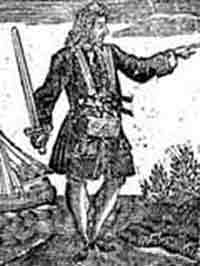
Charles Vane, Charles Towne Pirate

If you've read The Red Siren, you may remember the scene in the Pink House when Dajon and Faith and Lucas go in to rescue Hope. There was a pirate there who gave our Captain Waite a bit of trouble. His name was Charles Vane and he was a real pirate at the time. I thought you might be interested to know a bit about the rascal.
Charles Vane's was a very successful pirtate in his day, and in particular in 1718. His pirating career began when he joined other pirates in 1716 raiding Spanish ships that were recovering silver from galleons that sunk in 1715 off the Florida coast. In May 1718, two captains of plundered vessels reported Vane and his crew to Governor Bennett in Bermuda for his piracy.
When the new Governor Woodes Rogers arrived in New Providence, Nassau with two accompanying man-of-wars (HMS Milford and HMS Rose ), offering pardons to pirates in late July 1718, Vane set fire to a French sloops and set sail, firing a few shots at the entering man-of-wars as he sailed past them. Vane and his crew were the only pirates in New Providence that did not accept the pardon at Woodes' arrival.
A couple of days after his flight, Vane captured a sloop which he kept as a consort and sent Yeats aboard to command. In late August/early September, Vane and his consort were operating off the Carolina coas, attacking shipping entering and leaving Charleston. (and hanging out at the Pink House--which was an actual Pirate hangout in Charles Towne)
Outraged by the recent string of pirate attacks outside Charleston, the Governor and Council of South Carolina planned to rid the menacing pirates, in particular Vane, and commissioned two armed sloops led by Colonel William Rhett to find him.
While off Ocracoke Island, North Carolina in September 1718, Vane met up with Blackbeard and the pirate ships saluted one another and the two pirate crews proceeded to spend a week together in a typical pirate party. (Yikes!) After departing company, Vane continued his plundering successes and hoped to meet with Yeats again, but instead plundered a few more vessels from Charleston.
While off Ocracoke Island, North Carolina in September 1718, Vane met up with Blackbeard and the pirate ships saluted one another and the two pirate crews proceeded to spend a week together in a typical pirate party. (Yikes!) After departing company, Vane continued his plundering successes and hoped to meet with Yeats again, but instead plundered a few more vessels from Charleston.
Blackbeard's and Vane's crew celebrated together on the Carolina coast
On November 23, Vane came across a vessel in the Windward Passage and hoisted his pirate flag. But instead, the vessel retaliated with a broadside and it was discovered to be a French man-of-war. Vane fled the scene but the next day the crew confronted Vane and stated he was a coward. The crew elected the quarter master, Calico Jack Rackham as the new captain of the brigantine and Vane and his fellow supporters were set off on a small sloop.
In the following months, Vane and his new crew started from scratch again quite successfully by plundering several vessels. In February, Vane's sloop was wrecked on an uninhabited island in the Bay of Honduras during a fierce storm where most of the crew drowned. Vane survived but found himself marooned. Finally, a ship arrived but unfortunately for Vane it was commanded by an old acquaintance and former buccaneer Captain Holford. Holford would not rescue Vane from the island stating, "Charles, I shan't trust you aboard my ship, unless I carry you a prisoner; for I shall have you plotting with my men, knock me on the head and run away with my ship a pirating." And with that, Holford sailed away leaving Vane alone again.
Luckily another ship soon arrived and this time no one knew Vane so he was allowed on board. Unluckily, Captain Holford's ship met with this ship and he was invited aboard to dine by the captain. While there, Holford accidentally saw Vane working onboard and quickly informed the captain who Vane truly was. On knowing this, the captain relinquished Vane to Captain Holford who threw him in his hold and turned him over to the authorities in Jamaica where he was soon tried for piracy on March 22, 1720 and was hanged at Gallows Point and his body hung in chains at the small islet Gun Cay.
Now, you can see why he gave our Dajon Waite some problems.
Tuesday, February 10, 2009
The seed that fell on the rocky soil

For those of you who have read my latest book, The Red Siren, you know that the theme is taken from Matthew 13 and the parable of the seed and sower. Faith, the heroine in the story represents the seed that falls on the rocky soil
But he who received the seed on stony places, this is he who hears the word and immediately receives it with joy; yet he has no root in himself, but endures only for a while. For when tribulation or persecution arises because of the word, immediately he stumbles Matt 13:20-21
This is a theme very close to my heart because I know so many people this has happened to. They get "saved" and are so excited about the Lord at first. They read their Bible, attend every church session and seem to be living atop the mountains. But then something happens, a prayer doesn't get answered the way they want, a tragedy strikes them or their family, and they shrink away in despair, wondering if God even exists at all. Most usually end up falling away completely from their faith and getting involved in other religions or becoming agnostics. It is so sad! I'm trying to figure out why this happens and what to do to correct it, or at least help save some of these people. That's why I wrote this book. I wanted to show the horrible path someone could take if they turned away from God and tried to fix things on their own. And I wanted to show how that someone could find their way back to God.
I think alot of this has come about because of the false "prosperity" gospel that's being preached in this generation. You know the one that says God wants you to be "Healthy, Happy, and Wealthy" When if you truly read the Bible, God's real goal is for us to be "Sound minded, Joyful and Victorious" Totally different things than what the world says health, happiness and wealth are. Anyway, I digress.
If you've read my book, I'd love to hear your comments on what things you remember that helped Faith return to God. Or if you have any other ideas of how to direct someone back into the fold, or stories of your own you'd like to share. I truly believe this is an epidemic among today's Christians, especially young people, who are looking for something real, not the watered-down version of the gospel so many churches preach.
Sunday, February 8, 2009
Life life out on the plank!
 I wrote this article for another blog last week. Forgive me, if you've already read it, but I thought it was worth repeating.
Life after the Plank!
I love the Sea. To me it has always represented life, adventure, freedom, as well as uncertainty, danger and chaos. As a child, I could sit on a sandy beach and stare at the sea for hours on end, but I rarely went too far into the water. You see, I grew up shy and insecure and afraid of life. I preferred to avoid stressful situations at all costs. If I grew up on a ship, I’d be the one down in the hold, reading a book or guarding the cargo, putting up with the loneliness and stale air and rats just so I’d be in my comfort zone. At school, I trembled when I was called in front of the class to give a report. I avoided all social situations, and I didn’t apply for jobs that pushed me beyond my limits. I tried to live the “safe” life, never taken any big chances. Even in my love life. I stayed away from those men who made my heart skip a beat and stuck with the safer ones who wouldn’t break my heart. But I was unhappy, unfulfilled. God had given me big dreams even before I believed in Him—dreams like becoming an astronaut, flying a jet, sailing around the world, writing a novel. Did I do any of those things? I started a few of them, but my fear kept me stranded on my island of safety.
Then I became a Christian and discovered that “God has not given us a spirit of fear, but of power and of love and of a sound mind.” 2 Tim 1:7. Oh, I loved those words! They really spoke to me. I wanted to be that kind of person. I mean, we only get this one life to do things for God, this one chance, and I knew from Scripture that God had a unique purpose and plan for my life. Yet years went by and still I cowered, learning, and growing in God, yes, but not answering His call to go forward.
Finally, one day, I gave in to the burning in my soul to write a novel. I didn’t plan on submitting it. No way! I couldn’t stand the rejection. But then God got me laid off from my job. I needed income and I needed it fast. God had pushed me to the edge of a long plank hanging off my ship of safety and he was asking me to jump in. So, I did. (Actually, I think He pushed me!) Was it scary? Yes! Did I get rejections? Yes! Did they hurt? Yes. But I also got a contract! Now, I’m writing my 6th novel and I’m swimming along just fine. I speak to groups, I do book signings, radio interviews, things I would never have dreamed of doing before. I get an occasional heart-sinking review, but I also get some good ones too and more importantly, I get letters from readers who have told me my stories have brought them closer to God. I’m living the adventure God planned for me. Now, I’m wondering what took me so long!
Whether it’s writing a novel and submitting it, or talking to your neighbor about Jesus, or taking that job that scares you to death, or saying yes to that handsome guy or pretty girl who keeps showing interest, or speaking at a conference, if God keeps knocking on your heart to do something, DO IT. Do you want to stand before God after your life is over and hear him say, I had so much more for you, if you had just believed and stepped off the plank.
In fact, don’t step off, don’t wait to be pushed, jump in! Jump into the adventurous, beautiful sea and then rise up and start walking on the water. Take a hold of your Savior’s hand and don’t let go. You’ll experience the abundant life other people only dream about!
Wednesday, February 4, 2009
My cool birthday gift and on growing old

Okay, so Tuesday was my birthday. (I won't dare tell you how old I am!) But, at my age, birthdays are really no big deal. I told my husband that dinner and a movie out would be perfect. No cake. no singing. No presents. No big deal. But boy was I glad that my husband didn't listen to me, at least about the presents, because lo and behold, look what he got me. . . a replica of a 17th century pirate cutlass !!! (well, not an exact replica, but a pretty cool replica) I just had to share it with you. Isn't it gorgeous? It has an engraving of a tall ship on the hilt. I'm in heaven. And it's quite a bit heavier than you would expect. When I pull it from its sheath, it makes a metallic  chiming sound. Awesome. Does my husband know me or what? He's my new hero. Last year, he got me a 17th century replica of a flintlock pistol which I keep with me on my desk while I write (Ye never know when a half-masted slimy rogue may try an' sneak into me parlor )
Anyway, I know alot of women who really fear growing old. They buy those expensive creams that promise to erase wrinkles and lift and firm your skin, they spend hours in spas, drink wheat grass..etc.. all in an attempt to stay looking young. Our culture is so youth oriented. If you're not young and beautiful, you are not worth anything. That's the message we are bombarded with from all around. I find it very sad. Long ago, the aged were respected and looked to for their wisdom. They were treated as cherished members of society, instead of discarded into nursing homes and ignored. I used to ask God why he made us age. Why couldn't we just stay young until we died, but recently He gave me the answer.
 chiming sound. Awesome. Does my husband know me or what? He's my new hero. Last year, he got me a 17th century replica of a flintlock pistol which I keep with me on my desk while I write (Ye never know when a half-masted slimy rogue may try an' sneak into me parlor )
Anyway, I know alot of women who really fear growing old. They buy those expensive creams that promise to erase wrinkles and lift and firm your skin, they spend hours in spas, drink wheat grass..etc.. all in an attempt to stay looking young. Our culture is so youth oriented. If you're not young and beautiful, you are not worth anything. That's the message we are bombarded with from all around. I find it very sad. Long ago, the aged were respected and looked to for their wisdom. They were treated as cherished members of society, instead of discarded into nursing homes and ignored. I used to ask God why he made us age. Why couldn't we just stay young until we died, but recently He gave me the answer.
We humans will always cling to our own strenghts, our own beauty, our own success and power rather than cling to God. It's part of our prideful nature. I see it in my own children and in some people who are in their 20's and 30's. They are so strong and beautiful, they feel as though they have the world by the tail. What need do they have of God. Yet year after year, God strips us of our looks and our physical strength, not to punish us, but to bring some of us to our knees.
I'm not afraid of growing old because I know where I'm going. And as each year passes and I get more aches and pains and more wrinkles and sags, I intend to keep praising God for leading me gently to a place where I am more dependent on Him than ever!
Tuesday, February 3, 2009
I'm featured as Author of the Month !
Every month, Deena at Deena's books blogspot hosts a different author. During that time, she posts interviews, book reviews, recipies, interesting facts... etc.. etc.. about the author. And this month it's me! Deena offers different prizes and book giveaways too. So if you're interested, stop on by and make a comment.
http://deenasbooks.blogspot.com/2009/02/author-of-month-ml-tyndalls-almost-10_03.html
http://deenasbooks.blogspot.com/2009/02/author-of-month-ml-tyndalls-almost-10_03.html
Sunday, February 1, 2009
Do you want to prosper?

Psalm 1 is one of my favorite scriptures. It's short, sweet, and to the point and offers those who follow God one of the greatest promises for this life. First it offers a condition or a command, then it offers a promise if the condition is met. Here's the first three verses:
First, the condition
Blessed is the man who walks not in the counsel of the ungodly
Nor stands in the path of sinners
Nor sits in the seat of the scornful
But his delight is in the law of the LORD, and in His law he meditates day and night.
Now the Promise
He shall be like a tree planted by the rivers of water, that brings forth its fruit in its season,
whose leaf also shall not wither;
And whatever he does shall prosper.
The Exhortation in today's English:
Don't hang out with people who hate God and disobey Him
Stay in the Word of God, reading it, meditating on it, constantly be thinking about it
The Promise in today's English:
You shall be successful in all that you do
Wow! What a promise!
Many people translate "Prosper" in that verse to mean financial success, but I looked up the word Prosper in the dictionary and it means "To be successful, to thrive, to flourish; sometimes in the financial sense." God doesn't care so much whether we accumulate alot of wealth. In fact, the Bible says that the love of money is the root of all evil.
He who trusts in his riches will fall (Prov 11:28)
A good name is to be chosen rather than great riches (Prov 22:1)
A man with an evil eye hastens after riches (Prov 28:22)
Then I thought of the disciples and Jesus Himself and none of them were rich. Most didn't even have a place to call home. Some only had the clothes on their back. And surely these disciples meditated on the Word of God and didn't consort with the wicked. They met the conditions, didn't they? So what happened?
But would you say they were successful men? Would you say they accomplished what they set out to do? Remember, it was by this handful of common men that the Roman Empire was brought to its knees and the Gospel of Jesus was spread to the four corners of the known world. I would say that yes, their lives were extremely successful. They thrived at what they did. They flourished. They led victorious lives.
But would you say they were successful men? Would you say they accomplished what they set out to do? Remember, it was by this handful of common men that the Roman Empire was brought to its knees and the Gospel of Jesus was spread to the four corners of the known world. I would say that yes, their lives were extremely successful. They thrived at what they did. They flourished. They led victorious lives.
Now, I ask you, would you rather be rich or lead a victorious life?
For me, I'd much rather be victorious. Money is fleeting. Riches can be destroyed in an instant and do not bring true happiness. But being victorious in what you do for God lasts forever! Do you want to make a difference in this world? Do you want your life to mean something for all eternity? The formula is laid out quite simply for you in Psalm 1.
Jesus even made it simpler when asked what was the most important commandment. He answered in Mark 12: You shall love the LORD your God with all your heart, with all your soul, with all your strength, and with all your mind, and your neighbor as yourself.
Do this and you will live, Jesus said. And when He said "live" I believe he meant that "abundant life" he spoke about in John 10:10. Not riches, not lots of things, but a full, meaningful, victorious life!
And whatever he does shall prosper!!!
May Psalm 1 be your guiding light for the new year.
Subscribe to:
Posts (Atom)